Spend a day driving around Moscow to understand Russia’s petroleum crisis. Cars and trucks lined up at practically every gas station. Lines were long, short, stagnant, or moving steadily.
If there was no queue, the garage was closed due to a fuel shortage.
Remember, Moscow is Russia’s wealthy, crowded capital that draws in so many resources. Even here, officials cannot guarantee Muscovites adequate petrol and diesel to drive.
In the queues, people were more frustrated than angry. Yekaterina said she was “not happy” and “panicked because everybody thinks there will be no oil.” She claimed, “We just need to reorganize the oil distribution,” though.
As fuel reserves ran short, Elmar said the situation was “terrible” and prices were rising. “You are wasting hours to fill up,” stated he. “At the moment I am planning a trip to Dagestan, but I don’t know if I should drive there or not because there are so many problems with petrol.”
Asking who was to blame. “In our country, you can’t say what is to blame and who is to blame,” he said, smiling familiarly.
Most Russians feel they cannot publicly criticize the president or the Kremlin.
Valery found it unusual to live in an oil-producing nation. Russian unpreparedness was as much his problem as Ukrainian missiles. “I have no desire to get used to queues,” remarked he. “I hope the situation will change soon and won’t be continued.”
For many Russians, the conflict is more personal.
Putin has tried to shield most people; the fuel crisis will not be seen in the statistics until July, the likely effect of his five-year special military campaign. The war is barely visible in Moscow, except for propaganda posters praising brave soldiers.
The rising number of Ukrainian drone and missile strikes deep into Russian territory, targeting oil facilities and darkening Moscow and St Petersburg’s sky, is harder for authorities to ignore.
Add fuel shortages to internet shutdowns limiting information spread.
Russia, a major oil producer, struggles to refine enough petroleum for domestic consumption.
Andrei and his wife Yekaterina queued for the first time. He blamed “geopolitics” and acknowledged the potential for worsening. All sides should start talking about peace accord terms, he said. We don’t see it from our European partners. Perhaps the situation will worsen.”
He was stoic. “We survived the 90s. We recall harder times. It doesn’t scare us.”
Drivers waiting for petrol are all over social media. Some tailbacks are miles long. Posts show fights starting.
In the Black Sea resort of Anapa, Cossacks maintain queue order.
Jerrycans are forbidden in several locations, and rationing is common. One Siberian mayor is providing portable driver toilets. Some areas have cut transportation and trash service. Farmers worry about summer’s harvest.
Anxiety is prevalent.
But can Nato leaders in Ankara presume economic instability will put political pressure on the Kremlin?
In Kyiv, strategists believe regular Russians will get so angry that they will persuade their leader to cease the war.
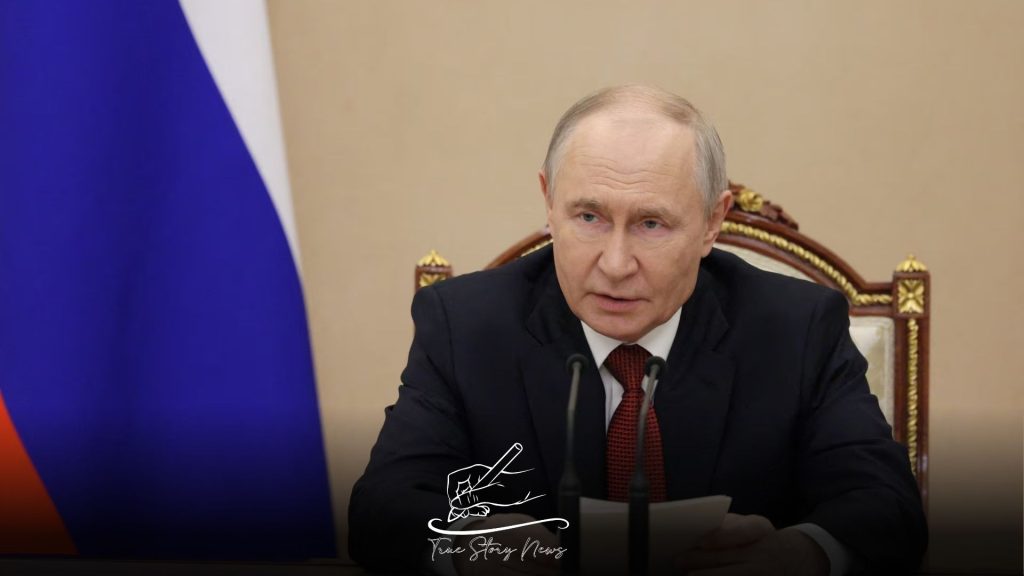
The Kremlin is watching. Putin appeared on state TV to discuss the fuel scarcity, saying the Ukrainian strikes are “obviously creating” problems, but “it’s not critical”.
However, authorities are taking no chances and have increased gasoline imports, subsidised fuel prices, and sold lower-grade fuel, which some fear could damage engines.
Putin and his advisers realize that shortages influence public sentiment.
The latest Levada Center poll says Putin’s support is falling to 74%. It also reveals that 52% of Russians think the country is on the right track, down from 61% in May.
Last week, Gallup reported that 60% of Russians were gloomier about their economy than at any time in the preceding 20 years.
According to the state-run Russian Public Opinion Research Centre (VCIOM), public trust in Putin decreased 3.4 percentage points to 73% in a week.
Christopher Weafer, head of the regional consultancy Macro Advisory, suggests that the fuel issue could significantly impact Russian economic growth. “The costs of the conflict are rising,” he said. While the full impact of the fuel crisis will not be seen in the statistics until July, the likelihood of a lasting crisis has significantly dimmed the growth prospects for the remaining part of the year.
Will the situation put political pressure on the Kremlin to reverse course?
The BBC quoted New School foreign relations Professor Nina Khrushcheva as saying Putin would not yield. “The more pressure he feels, the more likely he would act aggressively and repressively,” she added. “I think it is serious, but the Western expectation that Russians are going to just take down the regime is very far-fetched.”
She noted that Russians were angry, desperate, and “a lot resigned to what’s going on.” She added, “I mean, that doesn’t happen.” European aspirations of forcing Putin to negotiate were unrealistic.
All evidence indicates Putin is doubling down. He Last Friday, he donned military fatigues and visited commanders in military fatigues visiting commanders last Friday, claiming front-line gains and promising more land. “The Russian Armed Forces continue to confidently hold the strategic initiative in the special military operation zone,” he said.
Putin then ordered his generals to investigate Ukraine’s European partners’ “real combat actions” that he alleges are prolonging the war. Without further explanation, “We need this analysis for taking responsible decisions in the future.”
Diplomats and soldiers are puzzled by the phrase.
Western capitals wonder what Putin will do next. Will he escalate? If so, how?