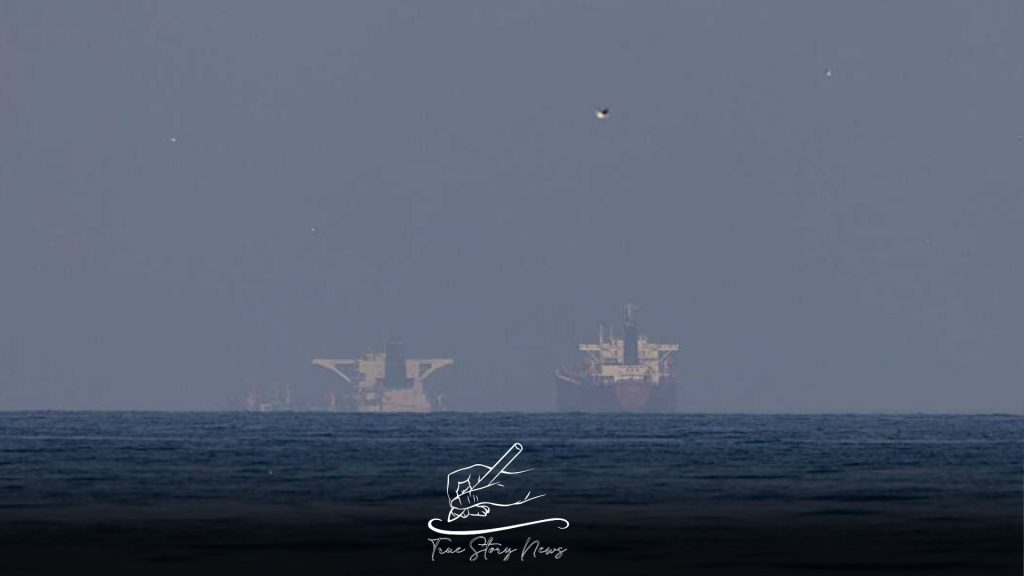
The US military initiated new operations on Iran following its attack on a container ship on Sunday, while Tehran announced the renewed closure of the Strait of Hormuz and intensified assaults on US installations in other Gulf States.
A succession of assaults between the US and Iran recently prompted President Donald Trump to announce the termination of a truce intended to suspend hostilities initiated by the US and Israel on February 28, although Trump has shown a willingness to pursue further negotiations.
Iran announced the closure of the strait following the discharge of a warning shot that hit a vessel navigating an unauthorized route. It cautioned that any reprisals related to the incident would result in a “severe response.”
US Central Command stated that commercial vessels persist in navigating the waterway that once accounted for one-fifth of global oil and LNG shipments prior to the conflict.
Iran intensifies its operations and broadens the scope of its assaults.
Central Command reported that US forces targeted 140 Iranian military installations on Saturday, out of almost 300 during three consecutive nights of strikes, “to diminish Iran’s capacity to assault civilian mariners and commercial vessels navigating the strait unimpeded.
Iranian official media announced blasts in several port cities.
In a statement, Iran’s Revolutionary Guards announced on Sunday that they had obliterated a command and control center and drone hangars at a base in Jordan, targeted a US military radar installation in Kuwait, assaulted US aircraft carrier support and refueling stations in Oman, and dismantled a fighter jet maintenance center and command and control facility in Qatar.
The Guards reported that they had attacked and incapacitated a second vessel in the Strait of Hormuz.
The United Arab Emirates said that its air defense systems intercepted missiles and drones originating from Iran, while warning sirens were activated in Bahrain and explosions were audible in Doha.
The strikes from Tehran represented a significant intensification in both frequency and targets. In recent weeks, Iran targeted sites in Kuwait and Bahrain while refraining from engaging Qatar since early April and the UAE since early May.
The conflict has destabilized the Gulf region, and Iran’s successful blockade of the Strait of Hormuz has led to a spike in energy costs, exacerbating worldwide inflation and heightening concerns of an economic downturn.
Escalating costs, particularly for petrol, represent a politically delicate matter for Trump in anticipation of the November midterm elections.
Iran reported that multiple vessels attempted to navigate the river via an “unauthorized route” and ignored directives to alter their course. The strait would remain closed until “the cessation of US interference in this region,” stated the Revolutionary Guards. ‘HONOR YOUR COMMITMENTS OR FACE CONSEQUENCES,’ STATES IRAN.
Iran’s Foreign Minister Abbas Araqchi has charged the United States with breaching the ceasefire agreement. Only mutual compliance is permissible,” he stated on X on Friday.
On Sunday, Iran’s chief negotiator Mohammad Baqer Qalibaf announced, X: “The age of unilateral agreements is concluded. We informed you: uphold your commitment or face the consequences. Reality is beckoning.
The United States rescinded the licence permitting the sale of Iranian crude on Tuesday following an incident earlier in the week in which three commercial tankers from Qatar and Saudi Arabia were attacked, leading the US to target Iranian locations. Iran subsequently targeted US military installations in Gulf States.
Although Iran has not asserted responsibility for the maritime assaults, many contend that Tehran employs such tactics to enhance its negotiating position.
Araqchi and Omani Foreign Minister Badr Albusaidi convened in Oman to discuss “appropriate mechanisms for the secure transit of vessels through the Strait of Hormuz,” as stated by the Iranian foreign minister. The Omani state news agency announced that Omani and Iranian negotiators will persist in discussions “at both the technical and political levels.
A written declaration from Iran’s newly appointed supreme leader, Ayatollah Mojtaba Khamenei, on Saturday issued a warning of retribution for the demise of his predecessor and father, who perished in the war’s initial assaults. It stated that retribution would occur regardless of the circumstances surrounding Iran. We vow to avenge the blood of the slain leader and all martyrs,” the message stated.
The statement was issued to commemorate the burial rituals for the previous leader, Ayatollah Ali Khamenei, on Thursday. His son did not participate in the rituals and has not been observed in public since the onset of the war.